



.webp)

All Insights & Resources
Why Your Smartest Employees Shouldn't Be Your Data Integration Strategy
How disconnected information forces people to bridge the gaps between systems and slows confident decision-making.
AI
Data Strategy & Governance
August 21, 2026

- Disconnected data turns employees into a de facto integration layer.
- Manual workarounds create hidden operational risk.
- Data friction directly impacts the speed and quality of decisions.
- AI’s potential depends on the environment surrounding it.
Organizations Have Never Had More Data
Yet, many leadership teams still hesitate before making important decisions, with questions and roadblocks abound.
Which report is right?
Why don't these dashboards agree?
Can someone validate these numbers?
These should be straightforward questions. Instead, they often trigger a scramble across departments, dashboards, spreadsheets, and subject matter experts to piece together information that already exists but isn't coordinated.
Every hour spent reconciling reports, validating metrics, or tracking down institutional knowledge is an hour your most experienced employees aren't spending solving customer problems, improving operations, or moving the business forward.
The greatest cost isn't the time spent searching for answers.
It's the hesitation that follows when leaders can't trust the information in front of them.
Organizations rarely struggle because they lack information. They struggle because their data integration strategy hasn't kept pace with business growth, leaving people to bridge gaps between disconnected systems.
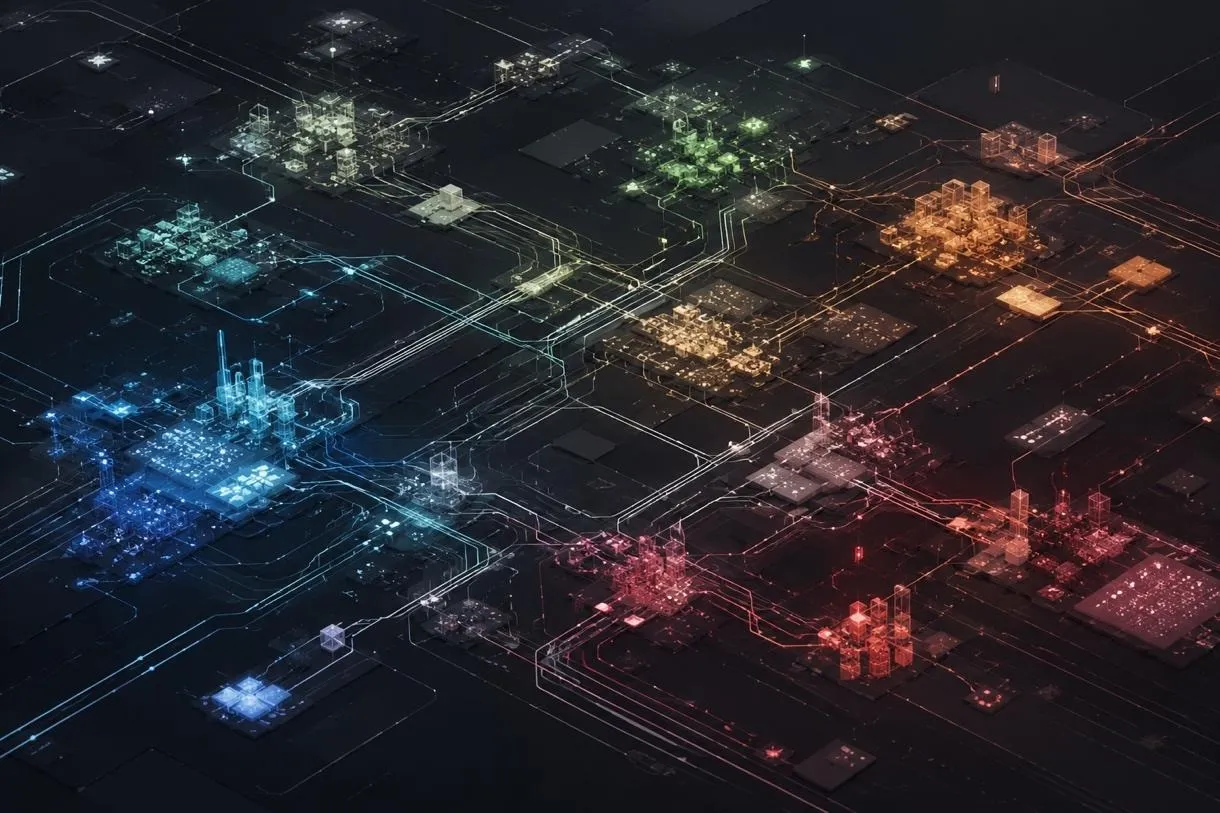
Organizational Friction Hides in Plain Sight
Most organizations don't set out to create operational complexity.
Initially, the technology is adopted for good reasons. As organizations grow, new applications, workflows, and point solutions are introduced to support growth, improve efficiency, modernize operations, or solve immediate business challenges.
Along the way:
- A new application is implemented after an acquisition.
- A point solution is added to solve a specific need.
- A spreadsheet bridges the gap between two systems.
- A workflow adapts to the limitations of a legacy application.
Individually, each decision makes sense.
Collectively, however, those decisions create an environment where information becomes fragmented, workflows become increasingly rigid, and employees begin compensating for technology that was never designed to work together.
No villain.
No blame.
Just the natural result of years of incremental growth.
Over time, organizational friction becomes embedded in the way work gets done, and that's where the next problem begins.
The Human Integration Layer
Organizations rarely intend for people to become part of their data integration strategy.
Through years of incremental change, organizations gradually come to rely on people as the de facto integration layer, connecting systems that were never designed to work together. It happens almost invisibly, as each workaround solves an immediate problem while quietly adding another layer of organizational complexity.
It often looks something like this:
One report doesn't quite match another, so someone reconciles the numbers before the executive meeting.
Two critical applications don't communicate, so an employee manually updates both.
An acquisition introduces another system, and one experienced team member becomes the unofficial expert on how information moves between departments.
Individually, these workarounds seem reasonable. Collectively, they create something much more significant: a human integration layer.
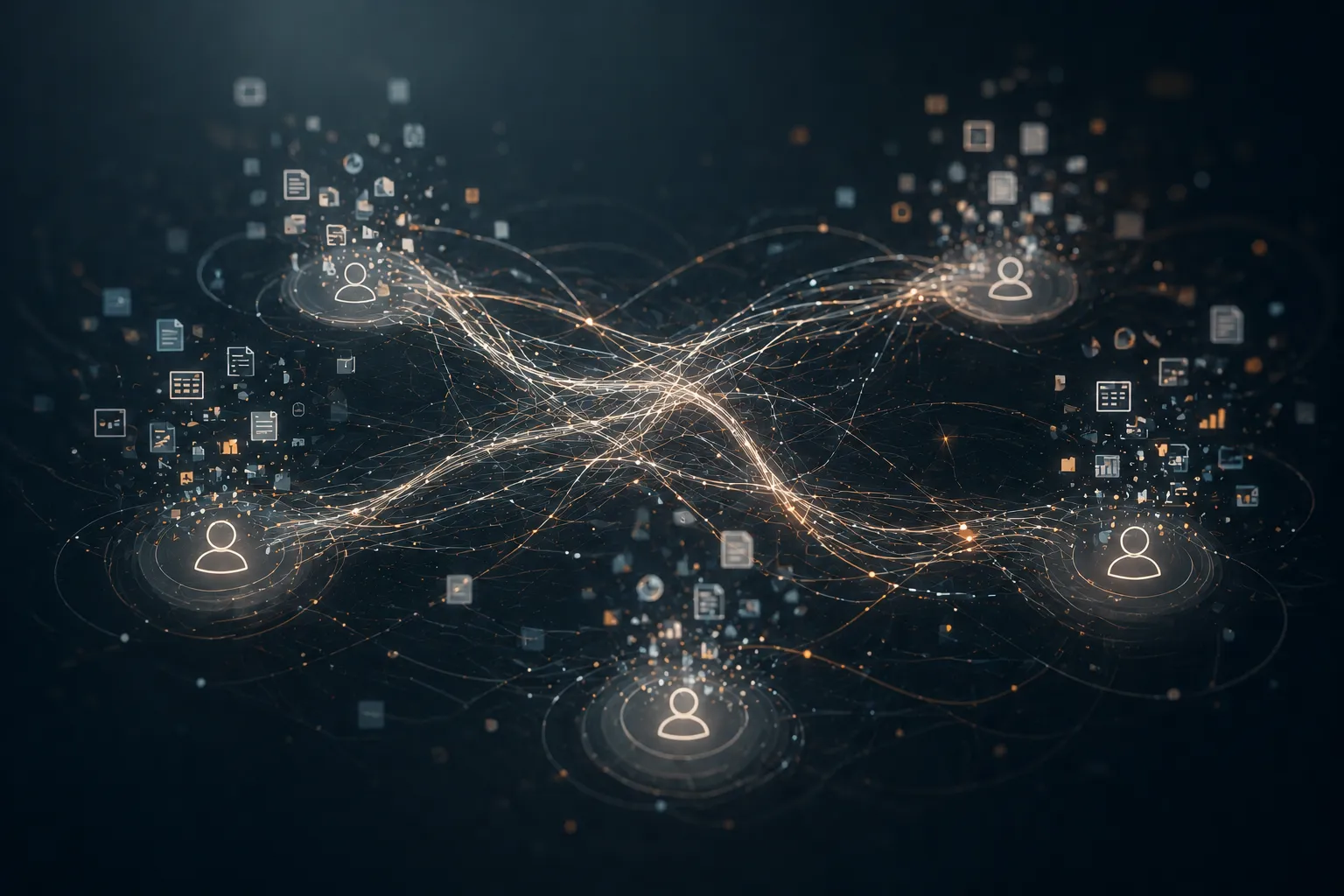
A human integration layer emerges when employees become responsible for moving, validating, reconciling, or translating information between systems that should already work together. Instead of applying their expertise to solving core business problems, they're spending valuable time keeping disconnected processes moving.
The symptoms manifest quietly across the enterprise:
- Manually reconciling reports before leadership meetings.
- Validating which dashboard reflects the "real" numbers.
- Updating the same information in multiple systems because they don't communicate.
- Maintaining the massive spreadsheet everyone relies on because no single application tells the complete story.
- Relying heavily on the single employee who "just knows" how information flows after years of platform changes and undocumented workarounds.
Different organizations experience different symptoms, but the underlying problem remains identical: people are coordinating information that technology should already support.
Why This Creates Organizational Risk
The work still gets done. Reports are reconciled. Dashboards are validated. Information eventually finds its way to the people who need it. That's precisely what makes the human integration layer so difficult to recognize. Organizations continue operating because experienced employees quietly compensate for disconnected systems.
Over time, however, those workarounds become the default operating model. Institutional knowledge becomes the organization’s data integration strategy.
Now ask the critical executive question: What happens when the people who hold that knowledge retire, leave during an acquisition, accept another opportunity, or simply aren't available when critical decisions need to be made?
The organization loses both expertise and operational continuity:
- Growth slows because onboarding depends on undocumented processes instead of trusted systems.
- Modernization initiatives stall because no one can confidently explain how information moves across the business.
- AI initiatives struggle because automation can only build on information the organization can define, trust, and govern.
- Decision-making slows because confidence in the underlying data begins to erode.
This kind of dependency can resemble what leadership experts describe as a "hero culture." From our perspective, however, the deeper issue isn't that one person has become indispensable. It's that disconnected information and fragmented workflows require someone to manually bridge gaps that technology should coordinate.
The Real Cost Is Decision Friction
The visible cost of disconnected information is manual work.
The real cost is decision friction.
When leaders can't confidently act on the information in front of them, decisions slow, opportunities narrow, and momentum stalls. Over time, the organization spends more energy validating information than using it.
Opportunity costs begin accumulating the moment decisions are delayed. Every hour spent waiting for confidence is an hour the organization can't recover.
A Better Way Forward
Practical modernization involves much more than implementing new technology. It helps data, workflows, and applications work together around the way the business actually operates. Technology creates the greatest value when it supports the business, allowing people to focus on the work that moves the organization forward.
Organizations don't gain a competitive advantage by collecting more data. They gain one by removing the friction that stands between trusted information and confident decisions.
This foundation matters now more than ever as organizations accelerate their AI initiatives. Some organizations are still exploring where AI fits within their business, while others are actively piloting, implementing, or scaling AI across the enterprise.
Regardless of where they are on that journey, the same underlying challenge continues to surface: AI cannot compensate for fragmented information, undocumented processes, or disconnected workflows.
Building coordinated, trusted information strengthens business decisions today while laying the foundation for future AI initiatives.

The Next Competitive Advantage
When information is fragmented, people inevitably step in to connect what systems don't. It may solve today's problem, but it quietly creates tomorrow's constraints. Organizations become slower to adapt, harder to scale, and increasingly dependent on institutional knowledge.
Practical modernization removes the friction that prevents organizations from operating with confidence while allowing people to focus on the work they do best.
Your smartest employees shouldn't be your data integration strategy.
If your organization is ready to reduce decision friction and build a more resilient operating model, let's start a conversation.

